What Is Specialty Coffee, Really? From the Plant to Your Cup
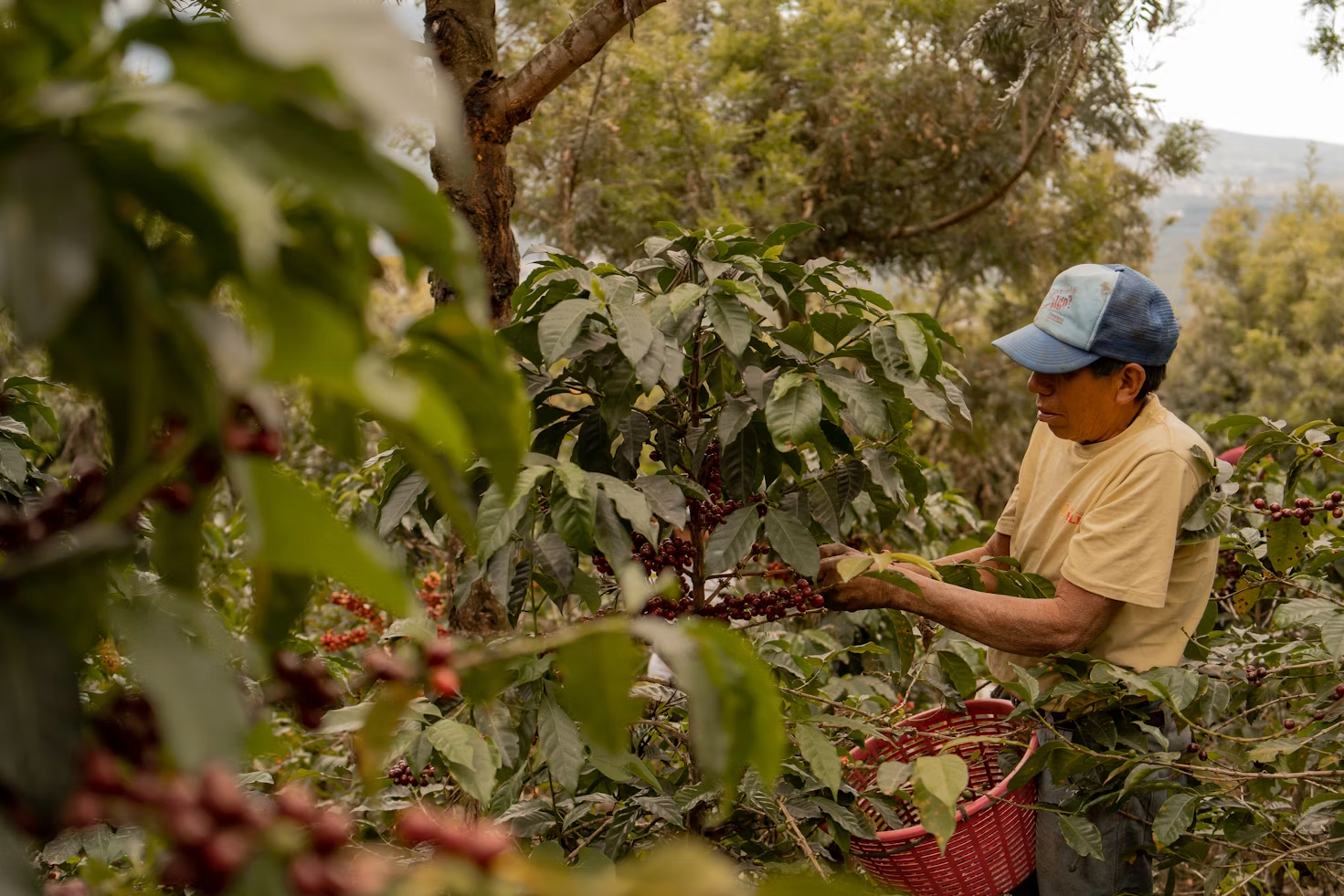
Coffee is one of the most complex agricultural products on the planet. Here is what that actually means — from the plant to your cup.
Coffee Is a Fruit. That Changes Everything.
Most people picture coffee as a dark, roasted bean. But that bean begins its life as a seed inside a fruit — a small, cherry-like berry that grows on a tree in the tropics. Understanding that coffee is a fruit from a plant, grown by a farmer in a specific place with specific conditions, is the first shift in how specialty coffee asks you to think.
The coffee plant belongs to the genus Coffea, a family of over 120 known species. Of those, two dominate global production. Coffea arabica — Arabica — makes up around 70% of the world’s coffee and almost all specialty coffee. It is genetically complex (an allotetraploid hybrid that formed naturally some 350,000–600,000 years ago from two other wild species), thrives at altitude between 900 and 2,000 metres, prefers steady rainfall and cool temperatures of 15–24°C, and produces a wide, nuanced flavour spectrum. Coffea canephora — Robusta — is hardier, higher in caffeine, more resistant to disease, and far more bitter. It dominates commercial blends and instant coffee. Specialty coffee is almost exclusively Arabica territory, not out of snobbery, but because Arabica’s genetic complexity makes a dramatically more interesting cup possible.
Coffee trees take 3–4 years to produce their first full harvest, and the cherries on a single branch ripen at different rates — meaning that on many specialty farms, picking is done by hand, cherry by cherry, selecting only what is ripe. This is called selective picking, and it is one of the first points at which specialty separates itself from mass production, where entire branches or whole trees are stripped at once regardless of ripeness.
What actually makes a coffee “specialty”
The term has a formal definition, established by the Specialty Coffee Association (SCA): a coffee that scores 80 points or above on a standardised 100-point cupping scale, with a maximum of five defects per 350g sample, and no primary defects at all. Trained tasters — called Q-graders, certified by the Coffee Quality Institute — evaluate each coffee across ten categories including fragrance, aroma, flavour, aftertaste, acidity, body, balance, sweetness, uniformity, and clean cup.
Scores break down roughly as: 80–84 = very good; 85–89 = excellent; 90+ = outstanding. Coffees in the 90+ range are rare, expensive, and typically auctioned. Most everyday specialty coffee sits in the 83–87 range — more than sufficient to be a completely different experience from commercial coffee.
But the number is only a threshold. What the score represents is a chain of decisions made correctly at every stage: where and how the coffee was grown, how the cherries were harvested, how they were processed, how the green beans were sorted and transported, how they were roasted, and how they were brewed. Specialty coffee is less a product category and more a commitment to quality at every link in that chain.
As James Hoffmann — 2007 World Barista Champion, co-founder of Square Mile Coffee Roasters, and author of The World Atlas of Coffee — puts it, specialty coffee is fundamentally about transparency and traceability. Knowing who grew it, where, how, and when.
Varieties: why the same “arabica” can taste completely different
Within Arabica, there are dozens of distinct varieties (also called cultivars or varietals), each with different flavour potential, yield, disease resistance, and physical characteristics. Variety is one of the biggest determinants of cup quality — as significant as origin or processing — yet it is still underexplained on most coffee bags.
Typica is the oldest known Arabica variety and the genetic parent of many others. Low-yielding, delicate, and refined in the cup — it produces some of the cleanest, most transparent profiles in specialty coffee. Found across Central America, Jamaica (Blue Mountain), and parts of Indonesia.
Bourbon (named after the island of Réunion, formerly Bourbon, where it was cultivated from Yemeni stock) is the foundational variety of Latin American specialty coffee. Known for exceptional sweetness, balance, and complexity. Red, yellow, and pink Bourbon are distinct sub-varieties with subtle differences in ripening and flavour profile.
Caturra is a natural dwarf mutation of Bourbon, discovered in the Brazilian state of Minas Gerais sometime between 1915 and 1918 — its name derives from the Guaraní word for “small.” Its compact size allows high-density planting and easier harvesting, which made it enormously commercially attractive; at its peak, Caturra represented close to half of Colombia’s entire coffee production. In the cup it delivers bright citrus acidity — orange, lime, occasionally red berry — with a clean, energetic character and enough sweetness to balance it. Washed Caturra from well-managed farms can show delicate floral tones reminiscent of Bourbon, while natural-processed Caturra tends toward riper, more generous fruit. Its vulnerability to coffee leaf rust has led to it being gradually replaced by disease-resistant hybrids in many regions, making well-grown Caturra increasingly worth seeking out.
Chiroso is one of specialty coffee’s most intriguing recent discoveries. Grown primarily in the high-altitude municipality of Urrao in Colombia’s Antioquia department, it is named after a colloquial Colombian Spanish word for something slightly elongated — a reference to its unusually long, narrow beans. Its exact origins remain unclear, but genetic research has found it unrelated to the Bourbon-Typica lineage and instead linked to Ethiopian landrace varieties — which explains a great deal about what it tastes like. A well-grown Chiroso can read like an Ethiopian coffee: jasmine florality, bright citrus, orange blossom, stone fruit, and a sweet tea-like finish that lingers cleanly. It has become a firm favourite on the competition circuit in recent years, and for good reason — it is one of the clearest examples of how much variety still exists within Colombian coffee beyond the familiar profiles.
Gesha (often written Geisha — correctly, it originates from the Gesha region of Ethiopia) is the most celebrated and expensive variety in specialty coffee. It was brought from Ethiopia to Central America in the 1950s as a disease-resistant planting, then largely forgotten until it won the Best of Panama competition in 2004 with an unprecedented cupping score. Its flavour profile — intensely floral, jasmine, bergamot, stone fruit, light body — is unlike any other coffee in the world. A well-grown Gesha can be a genuinely revelatory experience.
SL28 and SL34 were developed in Kenya in the 1930s and 1940s by Scott Laboratories (hence “SL”). Kenyan coffee produced from these varieties — often described as blackcurrant, tomato, grapefruit — is among the most distinctive and sought-after in specialty coffee.
Ethiopian heirloom is a category rather than a single variety. Ethiopia’s wild coffee forests contain thousands of genetically distinct plants, many still unclassified. When a bag says “Ethiopian Heirloom,” it means the coffee may contain a mixture of local landraces — which partly explains why Ethiopian coffees can taste so varied and often so extraordinary, producing flavours of bergamot, jasmine, blueberry, and tropical fruit that feel almost supernatural in a coffee cup.
F1 hybrids are the newest frontier. Developed by World Coffee Research, these first-generation crosses between distinct Arabica parents combine high cup quality with disease resistance and climate resilience — traits that historically haven’t coexisted in the same plant. Roasters like Onyx Coffee Lab, Tim Wendelboe, and others have begun featuring F1 hybrids prominently, and competition baristas have increasingly reached for them at the highest levels.
Where coffee comes from: the producers and their terroir
Specialty coffee is grown in a band roughly between the Tropics of Cancer and Capricorn — the so-called Bean Belt. Within that geography, altitude, rainfall, soil type, shade, and temperature all shape what ends up in the cup. This is terroir — the same concept that wine uses, and equally applicable to coffee.
Ethiopia is the genetic homeland of Arabica coffee and consistently produces some of the highest-scoring coffees in the world. The Yirgacheffe, Sidama, and Guji regions are famous for floral, citrus, and berry-forward profiles that can score 88–92 on the SCA scale. Ethiopian coffee is often described as the reference point for what coffee can be at its most expressive.
Colombia produces well-balanced, accessible Arabicas with pronounced acidity and ripe fruit. Its geography — steep Andean valleys, multiple harvest seasons per year, and a tradition of small producer farms — makes it the world’s largest Arabica exporter and a reliable source of quality coffee at many price points.
Yemen is perhaps the most ancient coffee-producing country in the world and the origin of the global coffee trade. Yemeni coffee is still grown in small terraced mountain farms, dried on rooftops using centuries-old methods, and produces some of the most idiosyncratic flavour profiles in specialty coffee — winey, chocolatey, dried fruit, spice. It represents less than 0.1% of global production but commands prices 10 times the global average.
Emerging origins are one of the most exciting developments in contemporary specialty coffee. China (Yunnan province), Nepal, Myanmar, Bolivia, and the Democratic Republic of Congo are all producing specialty-grade Arabica that is beginning to find recognition on the global stage. The specialty coffee world’s appetite for novel terroir means that well-grown coffee from almost anywhere can now find an audience.
Processing: the step most people don’t know about
After the cherry is picked, the fruit must be removed and the green bean dried before it can be roasted. Processing is this step, and it is one of the most powerful determinants of flavour — arguably as important as origin or variety. Two coffees from the same farm and same variety can taste entirely different depending on how they were processed.
Washed (wet) process removes the fruit skin and mucilage before drying, usually using water fermentation tanks. The result is a clean, clear cup that expresses terroir with high transparency — the acidity, varietal character, and origin notes come through without fruit interference. Most Ethiopian and Kenyan specialties are washed. The Coffee Chronicler describes washed coffees as “the loudest expression of origin.”
Natural (dry) process dries the whole cherry, fruit and all, on raised beds for weeks. The bean absorbs sugars from the drying fruit, producing more body, lower acidity, and fruity, often fermented or wine-like flavours. Ethiopian naturals are famous for intense blueberry and strawberry notes. Naturals are polarising — extraordinary when done well, funky and inconsistent when not.
Honey process is a middle path, common in Costa Rica and El Salvador. The skin is removed but varying amounts of mucilage (the sticky “honey”) are left on the bean during drying. Yellow, red, and black honey refer to how much mucilage remains and how long the drying takes. The result sits between washed clarity and natural sweetness.
Experimental and anaerobic processing
The last decade has seen a wave of experimental processing techniques that have divided the specialty coffee world. Anaerobic fermentation involves sealing the cherries in oxygen-free tanks before or during drying — the controlled environment amplifies specific fermentation compounds, producing intense, often unusual flavour profiles: cinnamon, tropical fruit, spice, rum. At the 2024 and 2025 World Barista Championships, the majority of finalists used anaerobically processed coffees, reflecting how dominant this approach has become in competition.
Carbonic maceration, borrowed directly from winemaking, ferments whole cherries before drying, creating vibrant, juicy, and highly distinctive cups. Producers in Colombia, Ethiopia, and El Salvador have been at the forefront of this technique.
The debate these methods have sparked is genuine and worth knowing: critics argue that heavy fermentation overwrites terroir — you taste the process, not the place. Proponents argue that controlled fermentation is simply a new tool in the producer’s kit, as legitimate as any other. Both positions have merit, and the best experimental coffees manage to do both: express place and process in equal measure.
Specialty vs. commercial coffee: the honest comparison
About 70% of the global coffee trade is commodity coffee — bought on the futures market (ICE), blended across origins, roasted for consistency, and sold without any information about where it came from or who grew it. This is not inherently bad coffee. It is coffee optimised for uniformity, price, and scale. The same cup, every day, everywhere.
Specialty coffee is optimised for something else: for the best possible expression of a specific coffee from a specific place in a specific season. That requires paying farmers more (specialty commands a meaningful premium above commodity prices, and the best specialty is often traded through direct or relationship trade, bypassing commodity markets entirely), roasting in smaller batches closer to the time of sale, and providing information — origin, farm, variety, process, roast date — that allows the whole chain of quality to be verified.
The practical difference in the cup: commercial coffee is typically bitter, flat, and uniform. Specialty coffee can be sweet, complex, fruit-forward, floral, or softly chocolatey — often without any bitterness at all. Not because bitterness is chemically removed, but because when coffee is grown well, processed carefully, roasted freshly, and brewed correctly, bitterness is simply not the dominant note.
The future of coffee
Coffee is facing a genuine crisis. Climate change is shrinking the areas where Arabica can be grown — the crop is sensitive to temperature, and projections suggest that up to 50% of current growing land could become unsuitable by 2050. The specialty industry, which depends on high-altitude, climate-specific Arabica, is acutely aware of this.
Several responses are underway. World Coffee Research is developing and distributing F1 hybrid Arabica varieties that combine cup quality with resilience — varieties that can produce great coffee in warmer, more variable conditions. Farms in Colombia, Rwanda, and Honduras are trialling these at scale.
Perhaps the most intriguing development is the renewed interest in species beyond Arabica. In May 2026, researchers at the Royal Botanic Gardens, Kew, formally proposed the name Coffea × libex for a hybrid of Liberica and Excelsa — two species previously grown only regionally — that shows remarkable climate resilience while producing a flavour profile that combines the better qualities of both parents. Coffee growers in Malaysia, India, and Central America are already cultivating this hybrid, and early commercial lots have been well received. It may not replace Arabica, but it is a serious candidate for the climate-resilient specialty of the future.
Excelsa (Coffea dewevrei) is also quietly gaining attention as a standalone. More drought-tolerant than Arabica, it produces a complex, somewhat tart and dark-fruit cup that a small number of specialty roasters are beginning to explore seriously.
On the production side, the trend toward traceability and direct relationships between roasters and farmers continues to deepen. Platforms like Algrano, Cropster Trace, and direct-trade programmes at roasters like Onyx, Tim Wendelboe, and Lithuania’s own Huracán are making it increasingly possible for a consumer to trace their cup to a specific lot, producer, and harvest date.
And at the cup level, the conversation about what specialty coffee can taste like is far from finished. Experimental processing, new varieties, and precision roasting tools are all expanding what’s possible. Morgan Eckroth — 2022 US Barista Champion and author of Coffee, for Here — frames specialty coffee not as a fixed category but as a moving standard: the best coffee the industry knows how to make, right now, with what it currently understands. By that definition, the best specialty coffee of 2030 will probably make today’s look tame.
The simple version
Specialty coffee is coffee where someone cared — at the farm, at the mill, at the roastery, and at the café or in your kitchen. That care produces something traceable, fresh, and flavourful in ways that commodity coffee, by design, cannot be. It is not about complexity for its own sake. It is about coffee that tastes like something specific, something honest, and something worth paying attention to.
You don’t need to understand F1 hybrids or anaerobic fermentation to enjoy it. You just need fresh beans from a roaster you trust and a little curiosity about what’s in the cup.